
Application context
Define the real duty before selecting equipment.
Commercial sites often combine kitchen, beverage-service and drinking-water duties. Peak demand, storage hygiene, distribution distance and maintenance access are as important as the treatment skid.
Feed-water source
Municipal tap water to be confirmed
Capacity basis
Sized from occupancy, peak-hour demand, storage and dispensing points.
Water challenge
Conditions that control the process.
Chlorine, sediment, hardness, dissolved salts and distribution hygiene, subject to current source analysis and local requirements.
Target water use and quality
Set the objective at the point of use.
A locally compliant drinking-water target maintained through storage, distribution and planned service.
Typical treatment train
- 01Sediment and carbon pretreatment
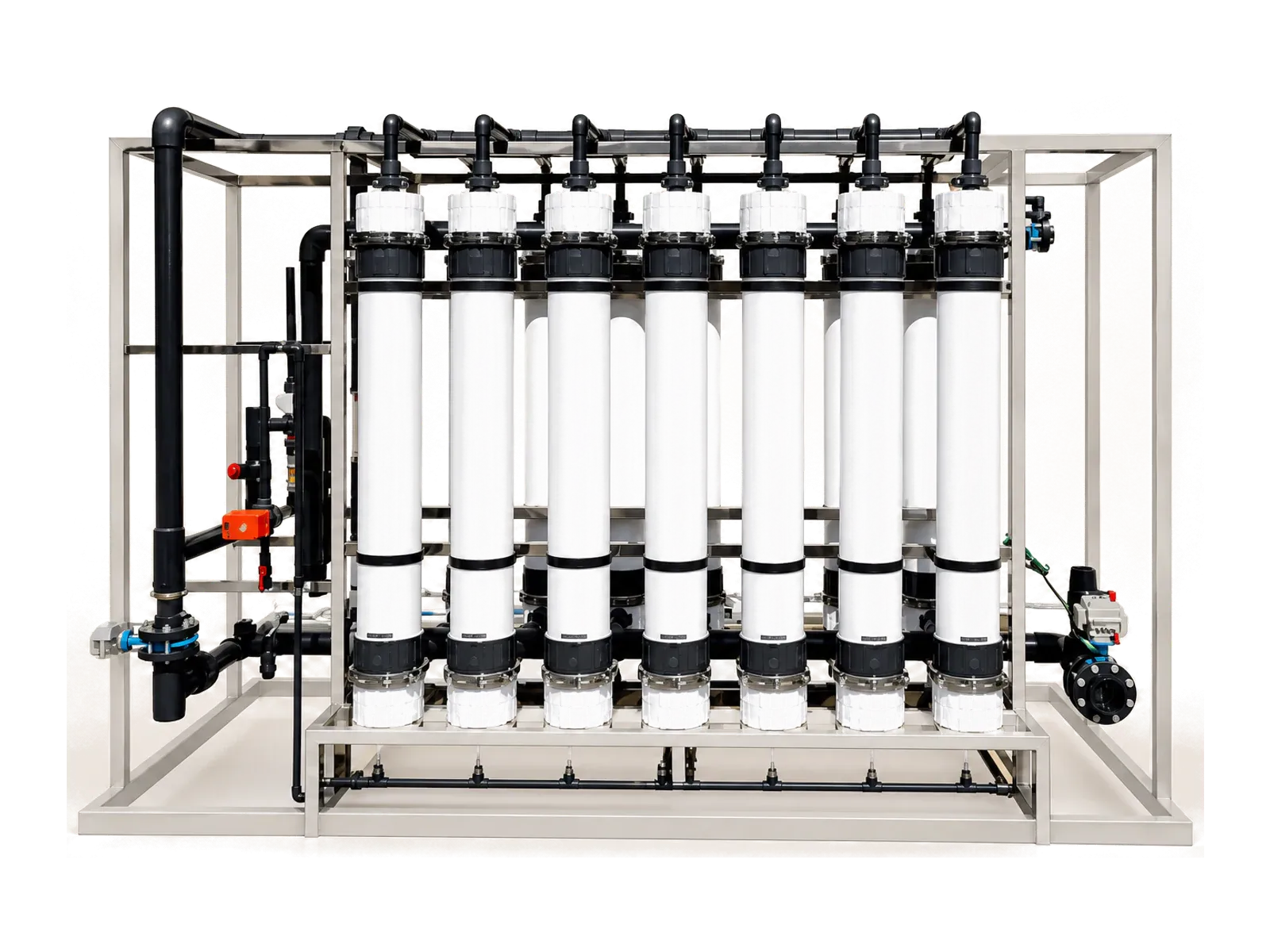
- 02RO where the approved design requires dissolved-solids reduction
- 03Disinfection, hygienic storage and distribution management
Main equipment and components
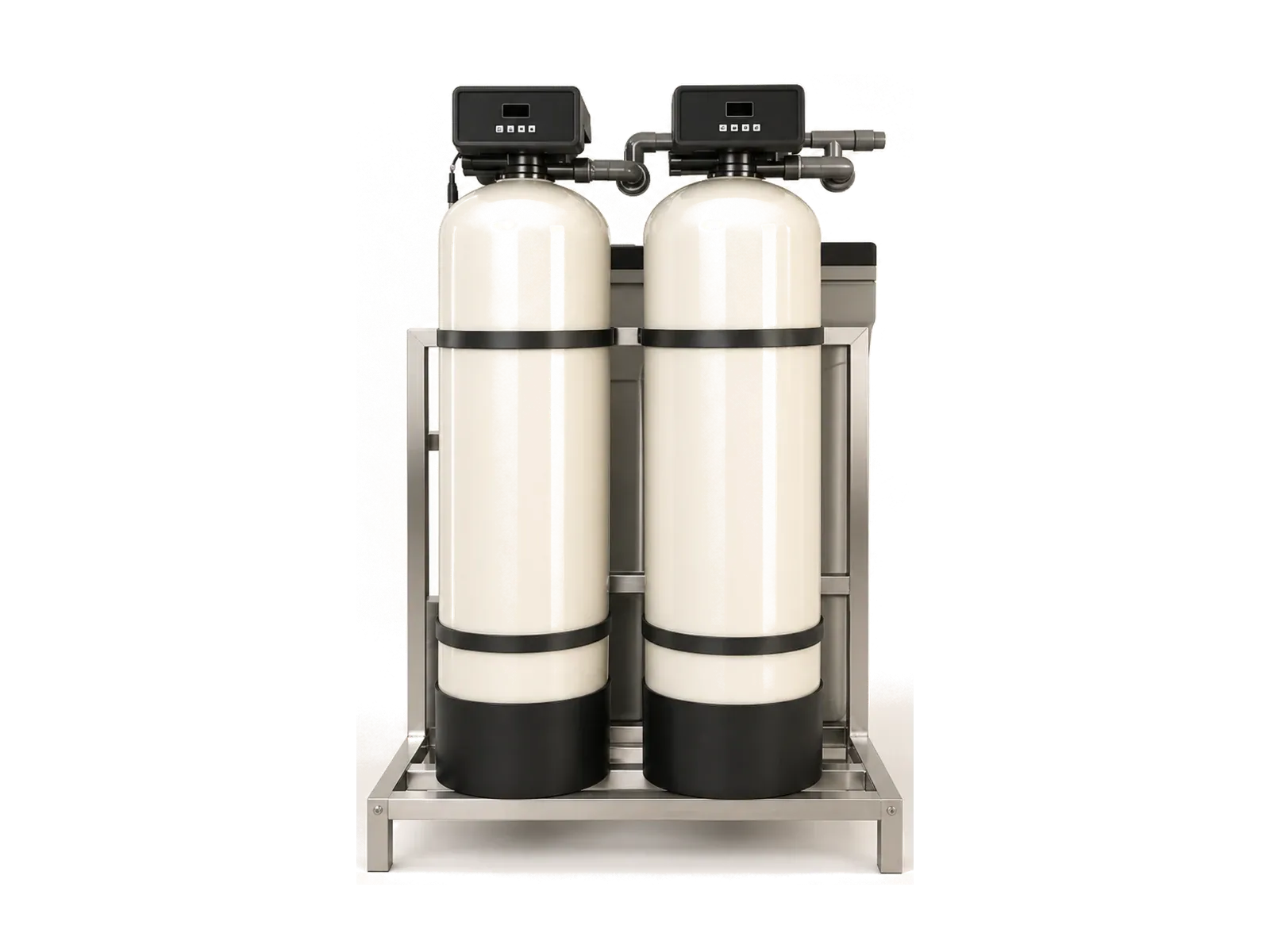
- Pretreatment vessels
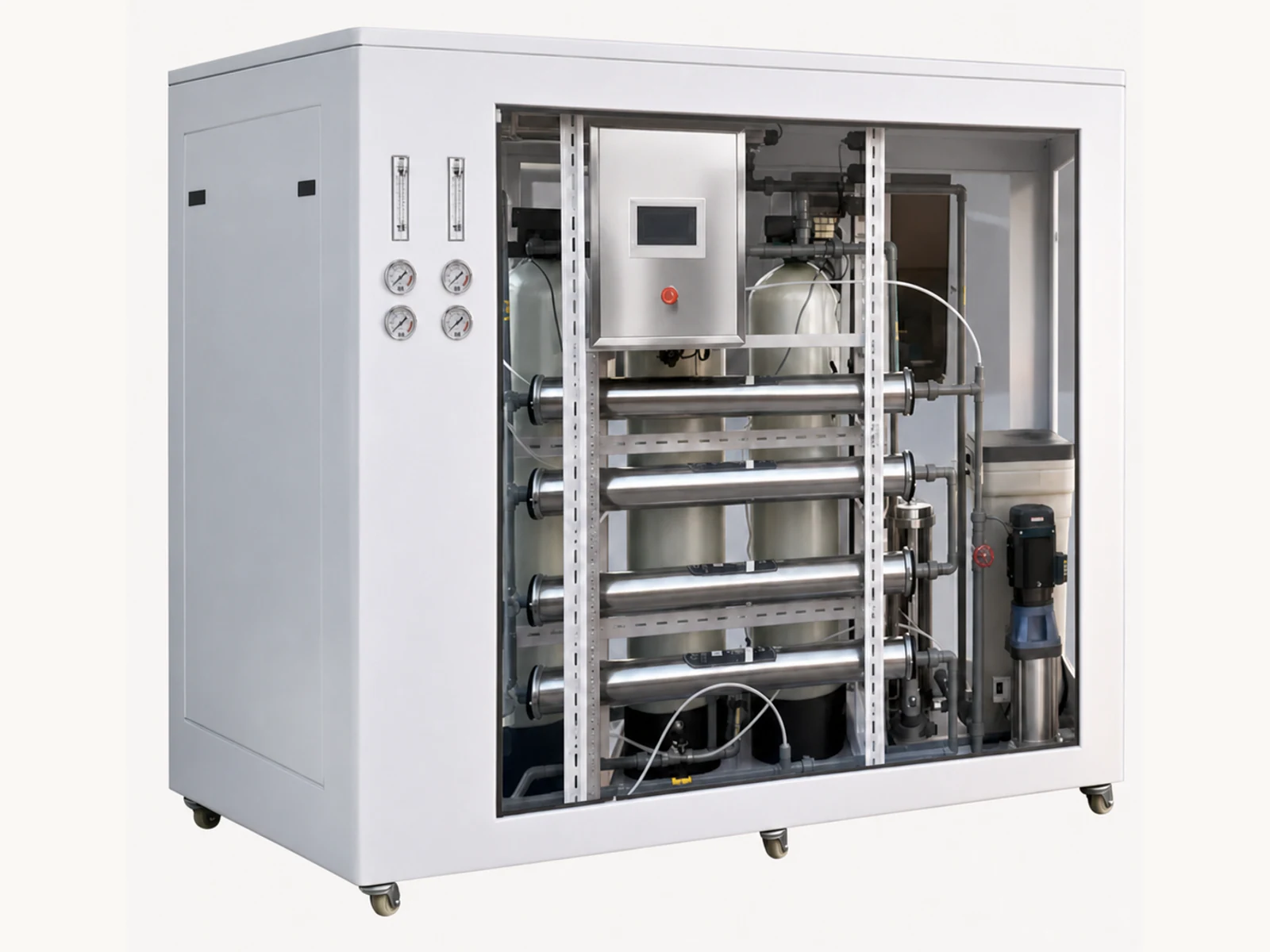
- Commercial RO skid
- Storage, disinfection and distribution interfaces
Configurable options
- Separate kitchen and drinking-water branches
- UV or ozone interface where approved
- Duty/standby pumps and remote monitoring
Utilities and operating assumptions
- Municipal feed and drainage
- Electrical supply and plant-room ventilation
- Scheduled sanitization and filter replacement
Required customer inputs
- Occupancy and peak demand
- Local water requirements
- Floor plan, distribution distance and dispensing points
Design objective
Confirm performance against an approved proposal.
Typical configuration only. No drinking-water compliance or health outcome is claimed without site-specific approval and testing.