SINGLE-PASS REVERSE OSMOSIS

Single-Pass Industrial Reverse Osmosis System

Configure an industrial reverse osmosis (RO) system around your feed-water analysis, required output and process-water target. Compare the reference configuration, treatment scope and quotation inputs below.

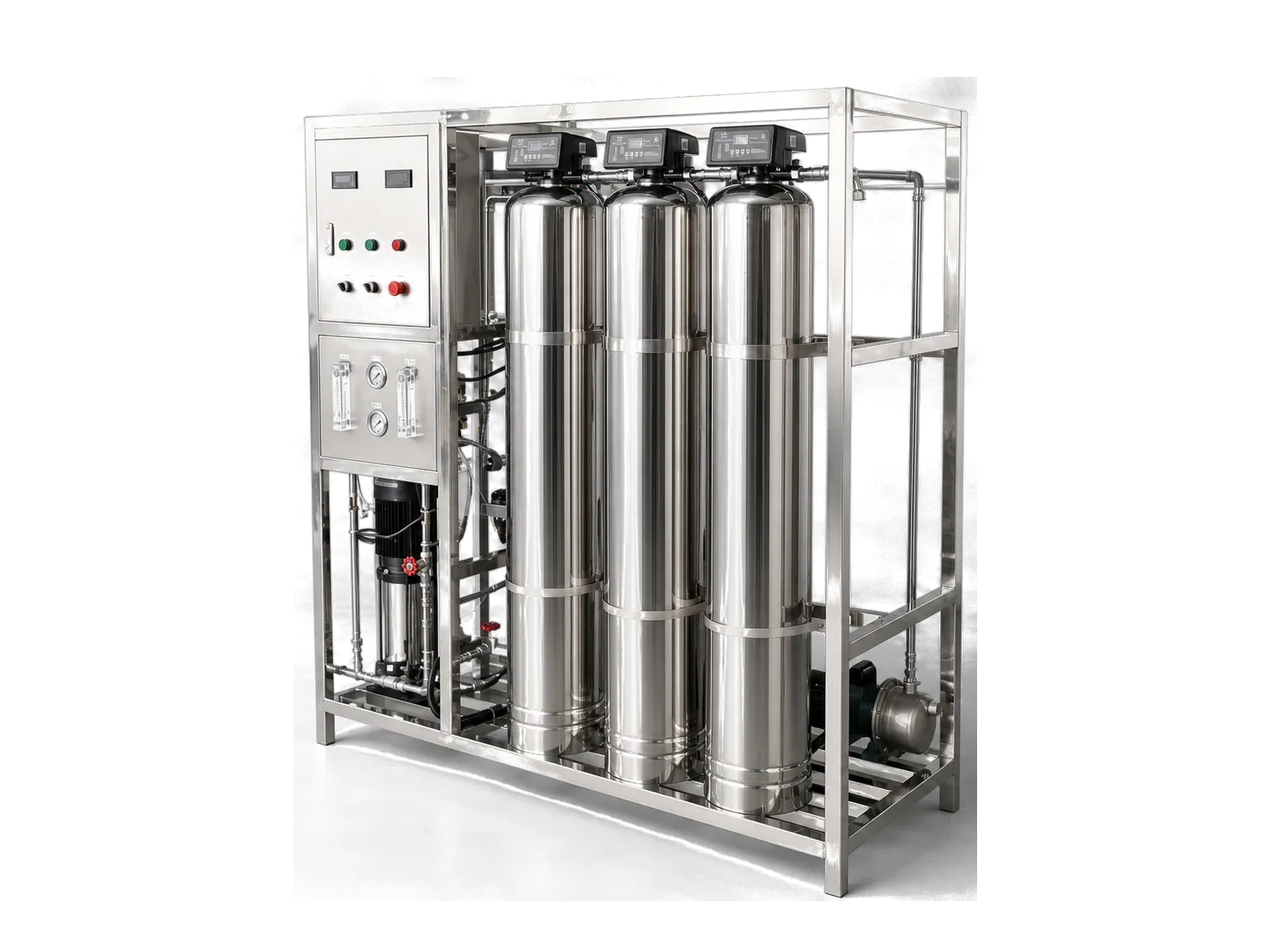
304 stainless-steel single-pass industrial reverse osmosis system with pretreatment vessels, pump, membrane housings, piping and control cabinet

Selection answer

When this system is the right starting point.

Start with this industrial RO family when a single RO pass is the appropriate dissolved-solids reduction stage and the required capacity falls within the confirmed 0.25–100 T/H range. Pretreatment and final output quality are selected from the submitted feed-water conditions and project duty.

Best fit

Use this family when these conditions align.

  • Municipal, well or river / lake feed water after source-specific review
  • Industrial and commercial duties requiring a configurable single-pass RO stage
  • Projects needing capacity, membrane arrangement, piping or membrane-housing options within the confirmed product family

Compare another system when

Change the process family when the treatment objective changes.

Enclosed Single-Pass RO

Municipal tap water, 1–10 T/H demand and an enclosed caster-mounted layout are the main selection requirements.

Double-Pass RO

The product-water target requires a second RO pass for lower conductivity than the selected single-pass design can provide.

Industrial Ultrafiltration

Suspended solids and colloidal control are the primary treatment objective or UF protection is being assessed before downstream RO.

System configuration

Available Configuration Options

Final pretreatment, materials and output quality are confirmed according to the submitted feed-water conditions and project duty.

  • Capacity from 0.25–100 T/H
  • 4040 / 8040 membrane arrangements
  • Pretreatment selection based on source water
  • Optional vessel, piping and membrane-housing materials
  • Optional cartridge filtration and chemical / softening support

Project customization options

OEM branding and project-specific configuration.

  • OEM logo and equipment nameplate
  • Voltage and electrical configuration
  • Control system configuration
  • Frame, piping and component options
  • Project-specific documentation

Industrial RO purchasing guide

Compare the industrial RO configuration and quotation scope.

The listed 1 T/H reference model and its dimensions describe one configuration. The 0.25–100 T/H family range requires project-specific selection; confirm capacity basis, feed conditions and electrical supply for the selected model.

Items to align before comparing industrial reverse osmosis quotations
ItemWhat to compareInput for the proposal
Production dutyProduct-water output at stated feed temperature, salinity and operating hours.Daily volume, peak demand, minimum feed temperature and target water quality.
PretreatmentSelected filters, hardness/scaling control and chlorine control before the RO membranes.Current water analysis, source variability and existing upstream equipment.
RO skid and controlsMembrane arrangement, pumps, frame, piping, housings, instruments and control functions.Material requirements, available power, automation interfaces and plant-room layout.
Storage and distributionTank, disinfection and delivery-pump scope alongside the RO skid.Use-point flow, storage turnover, pressure and hygiene requirements.
International deliveryPacking, freight terms, documentation, inspection criteria and startup/spare-parts scope.Destination, voltage, phase, frequency and allocation of site installation and commissioning work.

What affects industrial reverse osmosis system cost?

Compare quotations against the same water analysis and product-water duty. Pretreatment, materials, membrane arrangement, controls, storage, inspection scope and delivery terms can change the equipment cost. Feed flow, concentrate disposal, cleaning and consumables also affect the operating budget.

MAKORYN coordinates system configuration and equipment supply for your project. Send the project inputs for a scoped quotation, including which upstream and downstream equipment already exists.

Request an Industrial RO Quote

Why must capacity include feed-water conditions?

DuPont's WAVE design guidelines link membrane selection and feed-water type to limits for recovery, feed flow, permeate flow and concentrate flow. Specify the design conditions alongside the requested product-water output so the selected equipment can be assessed against the actual feed.

DuPont WAVE: RO design guidelines and feed-water types

When should you compare a second RO pass or EDI?

Start from the required quality at the use point. If a single pass cannot meet it under the agreed feed conditions, compare single-pass RO, double-pass RO and RO + EDI. Review the beverage project for an example of RO linked to disinfection and storage.

Process boundary

What this system family covers.

01

Feed side

Feed-water analysis determines the required solids, chlorine, hardness and cartridge-filtration pretreatment before RO.

02

Core process

The family covers a configurable single-pass RO stage on a 304 stainless-steel frame, with the listed membrane, piping and housing options.

03

Product-water side

Storage, disinfection, distribution and any application-specific polishing are confirmed outside the core single-pass RO stage.

Selection inputs

Information needed before configuration.

  • Complete feed-water source and current analysis
  • Required product-water quality and point of use
  • Required flow, daily volume and operating hours
  • Recovery objective and concentrate-disposal route
  • Feed-water temperature, available pressure, voltage and installation conditions
  • Required materials, controls and documentation

Start with your water conditions

Need a system configured around your application?

Share your application, feed-water source and required capacity. We will shape the treatment process, equipment scope and options around your project.