Semiconductor & Electronics
High-purity make-up and rinse-water planning based on ionic, TOC, particle and microbial requirements.
Open the semiconductor & electronics planning guideTreatment objective
High-purity water trains configured from the required ionic, organic, particle and microbiological control targets.
Discuss Your Water RequirementsApplication routes
Each application changes the design inputs, operating risks and useful level of treatment.
High-purity make-up and rinse-water planning based on ionic, TOC, particle and microbial requirements.
Open the semiconductor & electronics planning guidePurified-water pretreatment and generation concepts that remain subject to the facility validation and regulatory basis.
Process and rinse-water trains for cell and component manufacturing applications.
RO and polishing concepts for residue-sensitive lens and precision-component cleaning.
Common feed-water issues
Treatment objective
Process selection logic
Source-water characterization
Pretreatment and softening or antiscalant review
Double-pass RO where lower ionic load is required
EDI and application-specific polishing, UV or terminal filtration
Reference configurations


Core system starting points
These core families provide the main equipment starting points. Pretreatment, polishing, storage and controls are configured from the submitted water and operating data.
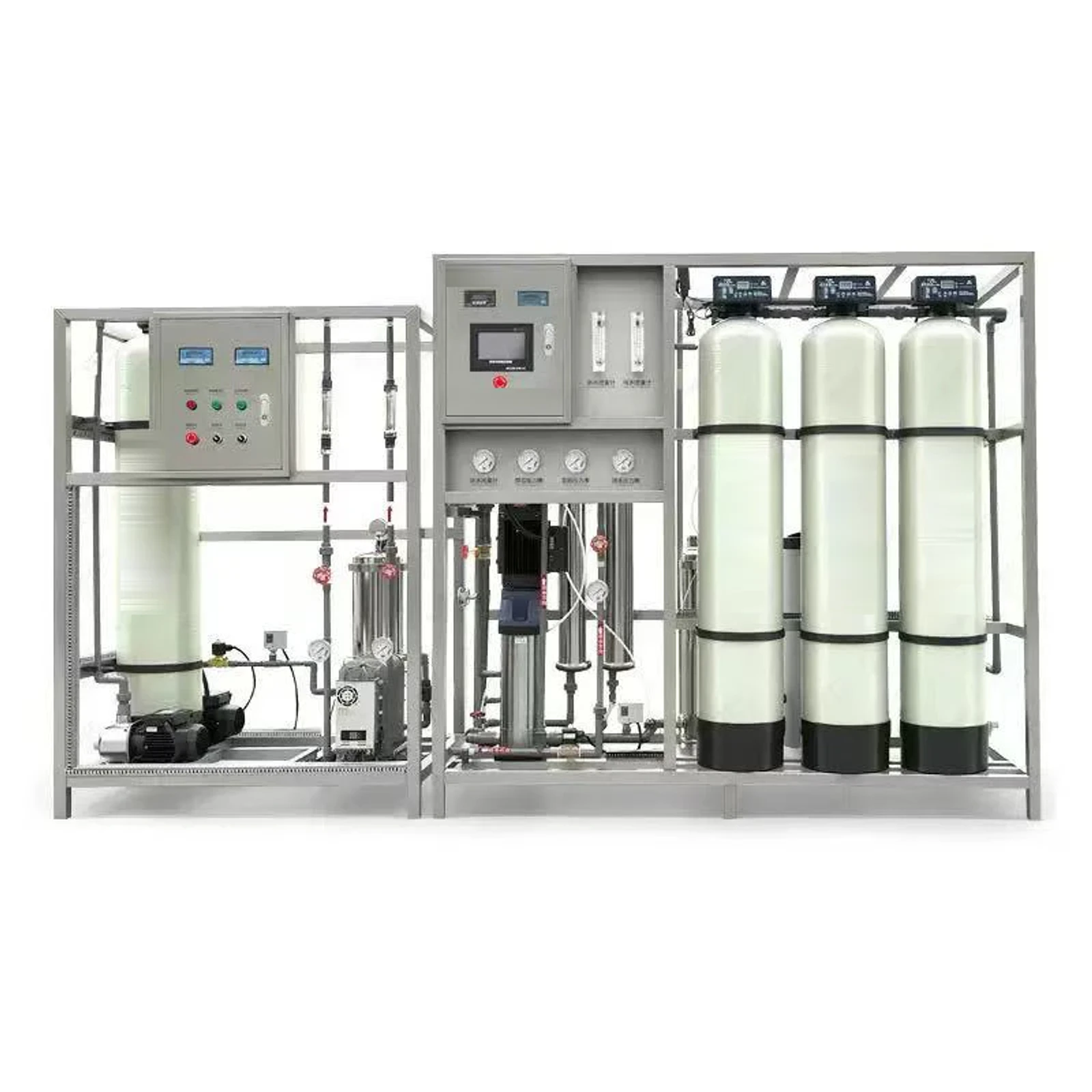
Primary starting point
Standard 250, 500 and 750 L/h RO + EDI configurations, custom-engineered up to 10 m³/h.
View core system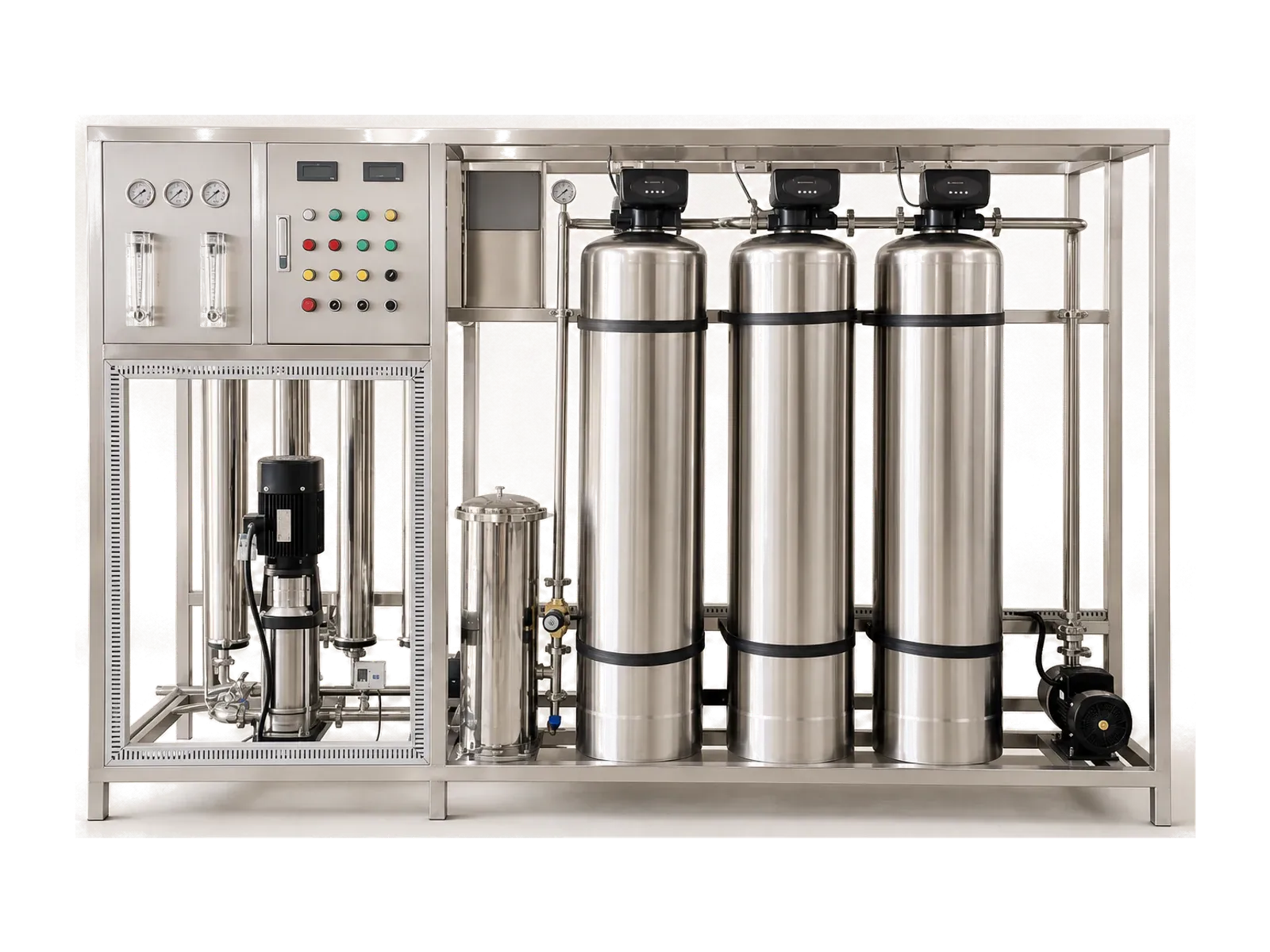
Alternative or supporting stage
A double-pass reverse osmosis system for higher-purity industrial and commercial water treatment, based on a 2 T/H reference configuration and customizable project sizing.
View core systemEngineering guidance
Compare single-pass RO, double-pass RO and RO + EDI by required water quality, feed-water load, operating profile, validation scope and verification requirements.
Open the engineering resourceRFQ preparation
A concise project brief is more useful than selecting a catalogue model first.
FAQ
Usually not for demanding applications. RO can provide the main desalination step, while EDI or another polishing stage may be needed to reach and maintain the application target.
Include source-water analysis, required quality at each use point, flow profile, operating hours, distribution-loop needs, monitoring requirements, utilities and validation expectations.
Start with your water conditions
Share your application, feed-water source and required capacity. We will shape the treatment process, equipment scope and options around your project.