Industry solution

Food & Beverage Water Treatment

Process-water treatment for ingredient, rinsing, cleaning and utility duties without assuming one hygiene standard fits every production line.

Discuss Your Water Requirements

Application risks

Identify what can change the design.

  • Seasonal variation in municipal or well-water quality
  • Hardness and alkalinity affecting heating, rinsing and membrane recovery
  • Chlorine, organics and suspended solids entering the RO pretreatment stage
  • Storage and distribution conditions that can change water quality after treatment

Treatment objective

Agree the target at the actual use point.

  • Ingredient or formulation water defined by the product owner
  • Rinse water matched to the contact surface and cleaning sequence
  • Utility water matched separately to boilers, cooling or washing duties
  • A sanitation and monitoring plan defined by the facility hygiene program

Recommended route

Translate the application into a treatment sequence.

The final sequence depends on the submitted water analysis and operating inputs.

  1. 01

    Characterize the feed water and separate product-contact from utility demand

  2. 02

    Apply filtration, chlorine control and hardness management as the analysis requires

  3. 03

    Use RO only where dissolved-solids reduction supports the defined production duty

  4. 04

    Add storage, recirculation or disinfection around the hygiene and operating plan

Sizing basis

Peak ingredient and rinse demand

Cleaning-in-place or washdown demand

Daily operating hours and storage autonomy

Design inputs

Data required before equipment selection.

  • Current feed-water analysis, including hardness, alkalinity, conductivity and turbidity
  • Water use at each point: ingredient, rinse, cleaning or utility
  • Peak flow, daily volume, production shifts and cleaning schedule
  • Required materials, sanitation method, voltage and available installation space

Main components

Components considered for this application.

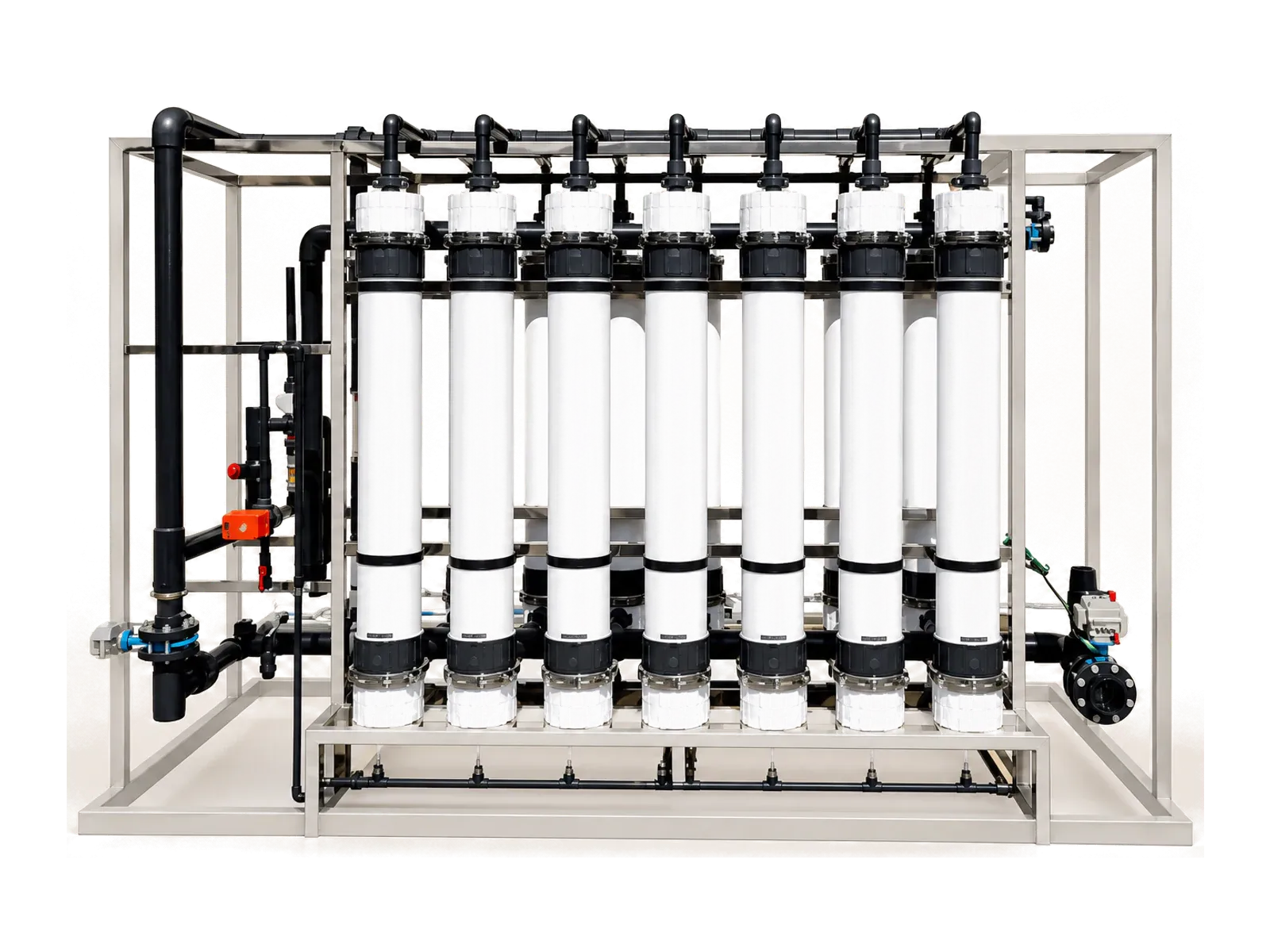
  • Feed-water filtration and chlorine-control stage
  • Hardness-control equipment where scaling requires it
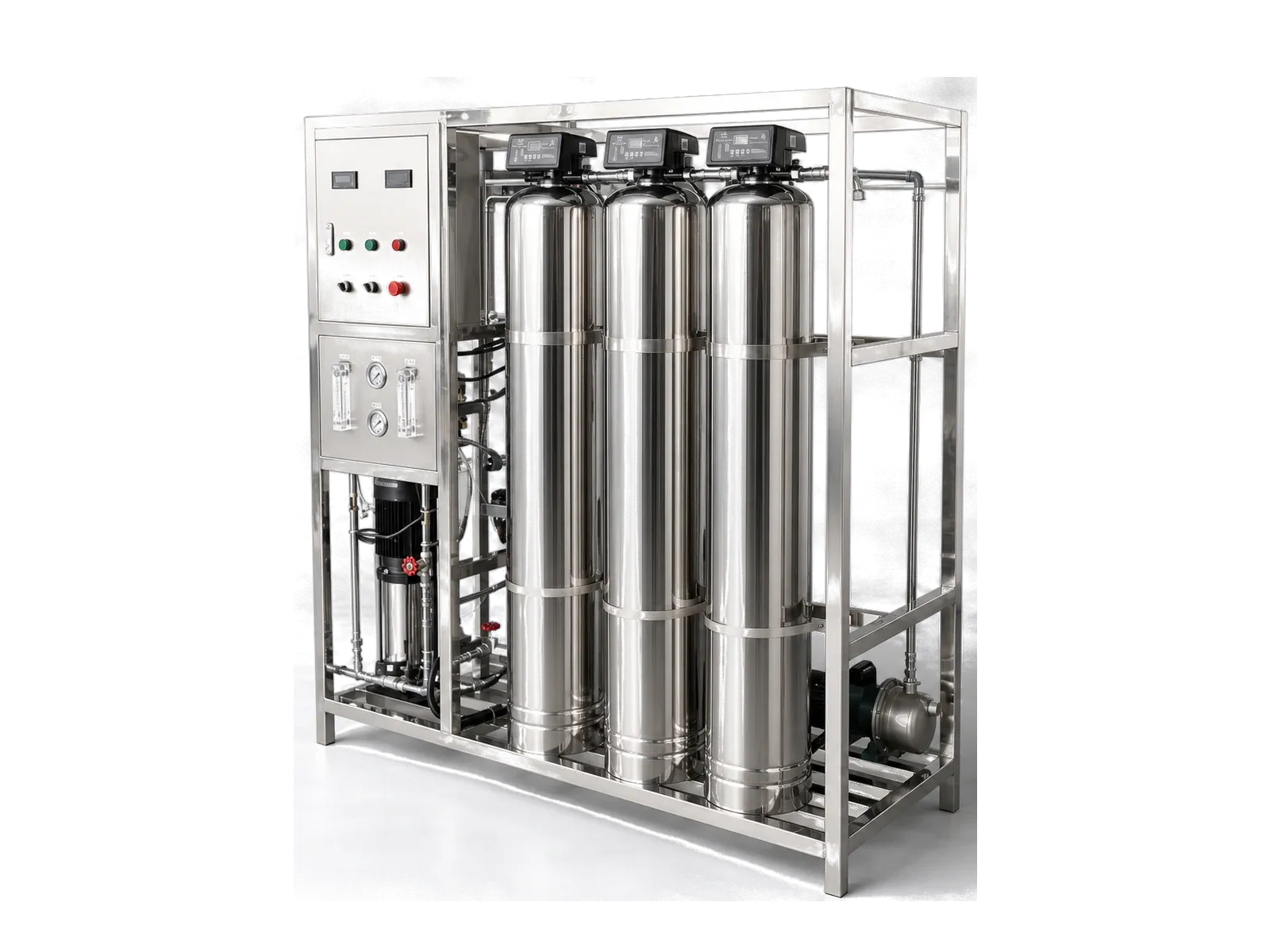
  • Industrial RO skid with instruments and controls when desalination is justified
  • Product-water tank, distribution interface and optional disinfection defined by the hygiene plan

Scope controls

Items to confirm before final selection.

  • An RO skid alone does not establish food-safety compliance.
  • Ingredient, rinse and utility duties may require different water specifications.
  • Materials, sanitation, monitoring and local requirements must be confirmed in the approved design basis.

Equipment components

Review system families against the design inputs.

RFQ preparation

Send the data that controls this application.

These inputs let the equipment scope be checked against the real use point.

  • Feed-water report or source description
  • Product and water-contact application
  • Required quality at each use point
  • Peak and daily demand, operating hours and cleaning schedule

FAQ

Questions about food & beverage water treatment.

Should ingredient water and cleaning water use the same treatment system?

Only when their quality, pressure, hygiene and operating requirements are compatible. Separate polishing, storage or distribution may be more practical when the duties differ.

What determines whether a food plant needs RO?

The decision depends on feed-water salts and hardness, the product or rinse specification, recovery constraints and how the treated water will be stored and sanitized.

Which production details should be included in a food and beverage RFQ?

Identify every water use, peak and daily demand, production shifts, cleaning schedule, target quality, preferred materials, utilities and available water analysis.

Start with your water conditions

Need a system configured around your application?

Share your application, feed-water source and required capacity. We will shape the treatment process, equipment scope and options around your project.