Plan hotel water filtration, softening and reverse osmosis around guestrooms, kitchens, laundry and utility loads. Compare treatment by use point, then prepare the water and site data for a project proposal.
Hardness affecting fixtures, laundry, heating and kitchen equipment
Taste, odor, sediment or chlorine concerns at selected outlets
Large morning, meal-service and occupancy-driven demand peaks
Storage sanitation and maintenance across multiple building zones
Treatment objective
Agree the target at the actual use point.
Use-specific targets for guest, kitchen, beverage and utility water
Reliable flow and pressure during occupancy peaks
Local drinking-water safeguards for any potable outlet
Maintainable zoning, storage and replacement plan
Recommended route
Translate the application into a treatment sequence.
01
Map guest, kitchen, laundry, boiler, cooling and drinking-water demand
02
Confirm source quality and local potable-water obligations
03
Select central filtration or softening and local RO/disinfection where appropriate
04
Size storage and distribution for simultaneous peak demand and sanitation access
Sizing basis
Guestroom and public-area peak demand
Kitchen, beverage and laundry peak demand
Separate utility and drinking-water zones
Hotel system selection
Water treatment by hotel use point.
Hotel water filtration, softening and RO: what to assess
Use point
Treatment decision
Data to provide
Guestrooms and hot water
Assess sediment filtration and hardness control against fixture, heating and distribution requirements.
Simultaneous draw, pressure zones, hardness, temperature and hot-water equipment requirements.
Laundry
Assess softening against incoming hardness and the laundry equipment and wash-process requirements.
Machine fill volumes, cycle timing, overlapping loads and water-quality requirements.
Kitchen, ice and beverages
Assess filtration, chlorine control and zoned RO against food-service and appliance requirements; plan storage and hygiene together.
Kitchen peaks, appliance specifications, target taste/mineral profile and local potable-water requirements.
Boiler makeup
Compare softening, RO or further treatment against the boiler manufacturer's feed-water specification.
Boiler pressure, makeup flow, condensate return and accepted water-quality limits.
How much treated water must the hotel system produce?
Divide the selected zone's daily treated-water demand by its available production hours. Then check storage and the distribution pump against the timing and flow of peak use.
Illustrative calculation: a zone needing 12 m³/day with 8 production hours starts at 12 ÷ 8 = 1.5 m³/h of product water. This is arithmetic for planning, not a hotel consumption standard or a selected equipment rating.
A short peak can exceed that production rate. Confirm usable storage, refill time, maintenance downtime and seasonal demand before selecting the system. Feed-water demand and RO concentrate must be calculated separately from the proposed recovery.
What should a hotel water-treatment proposal include?
Agree the treatment flow, equipment schedule, design conditions and quality target for each zone. Ask for the layout, connection points, electrical requirements, control scope and planned inspection criteria.
For international supply, also confirm packing and delivery terms, startup consumables, spare parts, documentation language and who handles unloading, installation and commissioning at the destination.
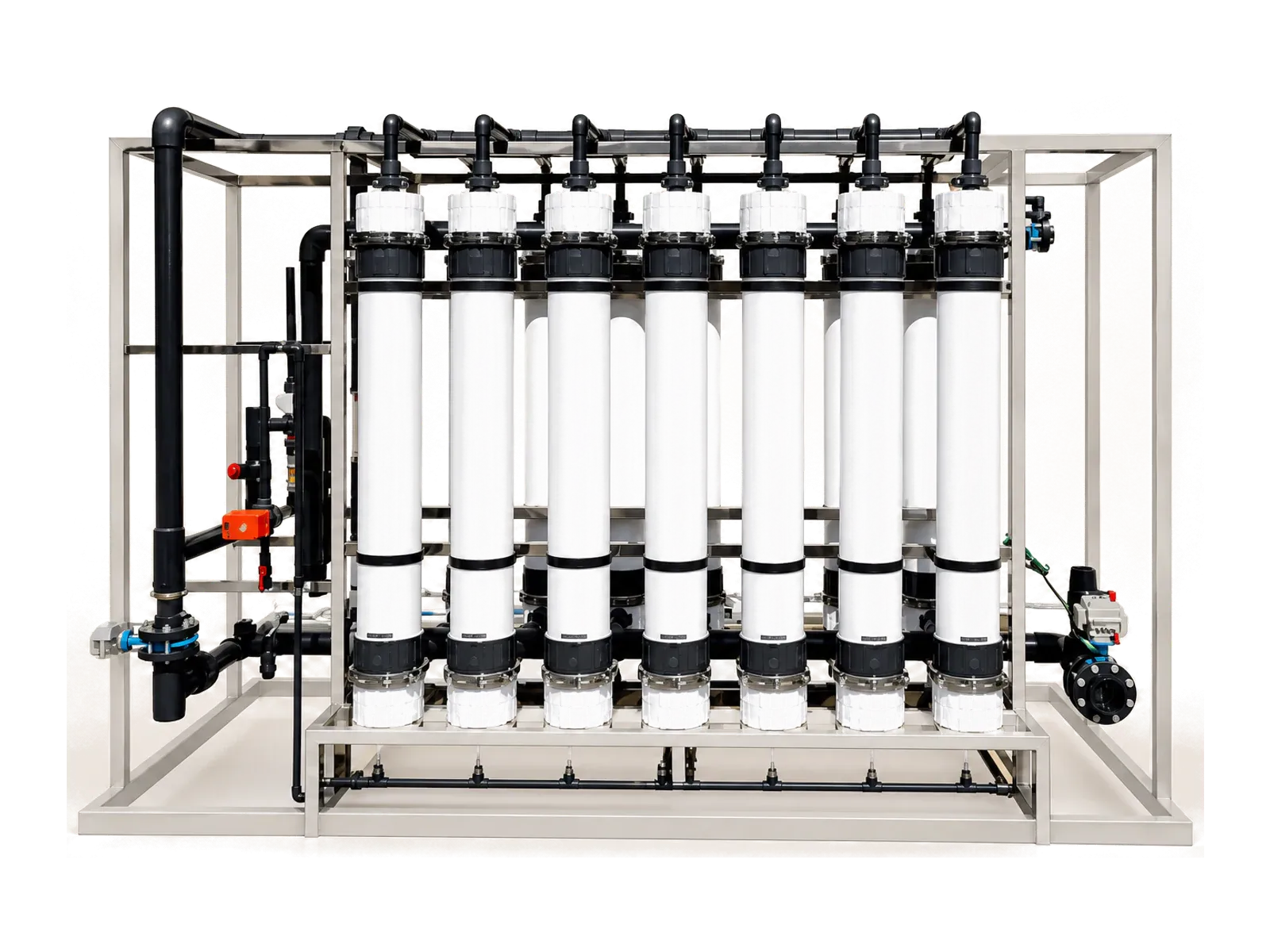
These core families provide the main equipment starting points. Pretreatment, polishing, storage and controls are configured from the submitted water and operating data.
Primary starting point
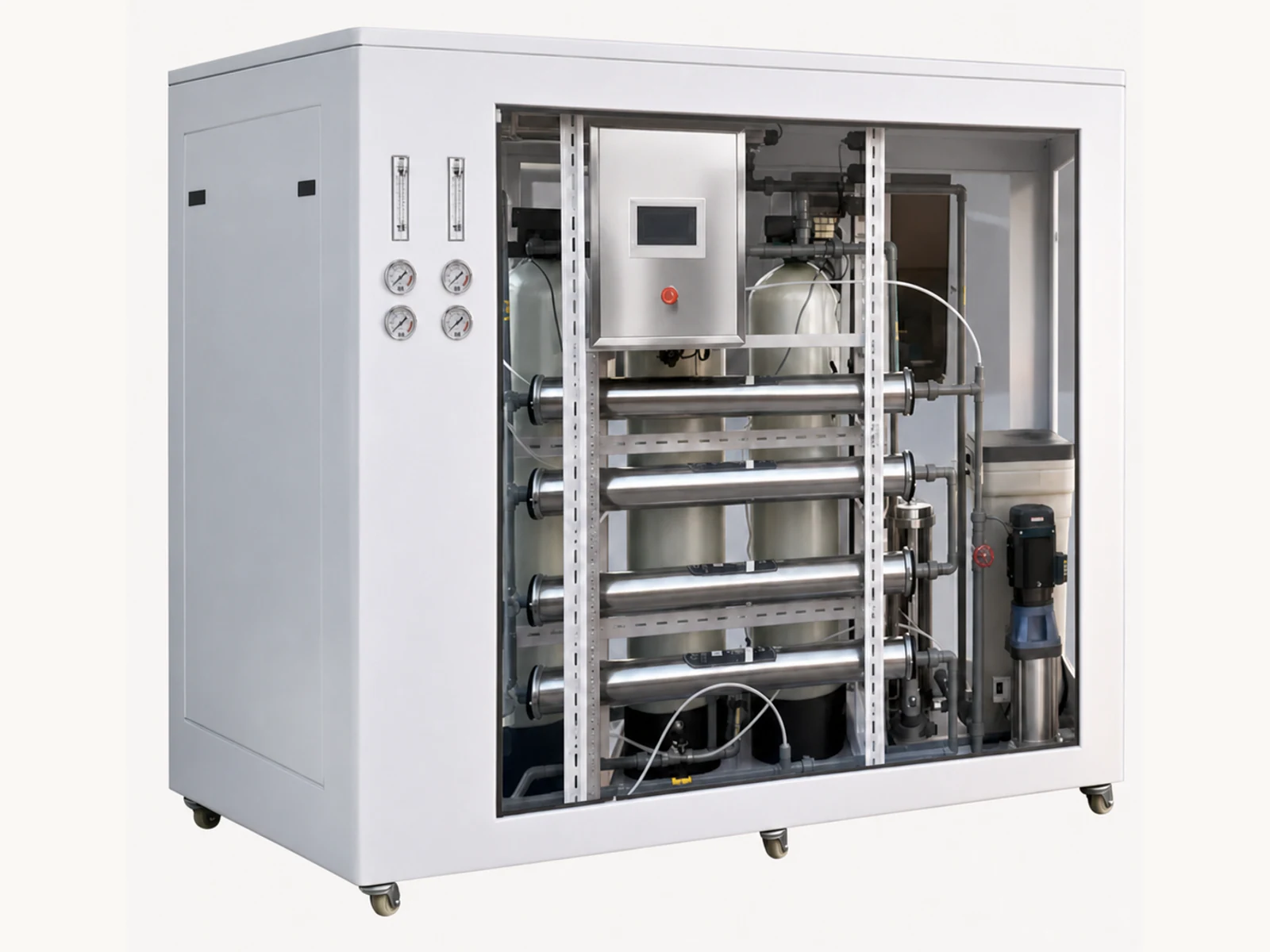
Enclosed Single-Pass RO System
A removable enclosed, caster-mounted single-pass reverse osmosis system for municipal tap-water applications, configurable from 1 to 10 T/H.
These inputs let the equipment scope be checked against the real use point.
Destination country, hotel size, occupancy and seasonal peak
Water use by zone: daily volume, peak flow and operating hours
Source-water analysis, temperature range and point-of-use quality targets
Storage, pressure zones, plant-room layout, voltage, phase and frequency
Requested equipment scope, delivery destination and site installation responsibilities
FAQ
Questions about hotel water treatment.
Should hotel guest water, laundry water and kitchen water be treated together?
Only when the quality and pressure requirements are compatible. Zoning often avoids over-treating utility water while protecting kitchen or beverage points.
How should a hotel water system be sized for occupancy peaks?
Use simultaneous guest, kitchen, laundry and public-area demand together with storage and refill time. Average daily occupancy alone can understate the required peak capacity.
Does every hotel need a central reverse osmosis system?
RO is considered when the source water and a defined use-point target require dissolved-salt reduction. Filtration or softening may address other duties. Compare central treatment with separate kitchen, beverage and utility zones before choosing the equipment scope.
Can a hotel drinking-water claim be based only on an RO unit?
No. Source safety, materials, storage, disinfection, monitoring, maintenance and local regulations all need to be addressed for the complete installation.
Start with your water conditions
Prepare your hotel water-treatment proposal.
Share the destination, water analysis, demand by zone, storage and site utilities. We will review the treatment route and equipment scope around your project.
Allow analytics and advertising measurement to help us understand which pages and contact options are useful. Project inquiry content is never sent to analytics.