Testing Laboratories
Water systems planned around analytical methods, instrument demand and rinse-water sensitivity.
Open the testing laboratories planning guideResearch solution
Central and point-of-use water purification planned around analytical methods, daily demand and contamination sensitivity.
Discuss Your Water RequirementsApplication routes
Each application changes the design inputs, operating risks and useful level of treatment.
Water systems planned around analytical methods, instrument demand and rinse-water sensitivity.
Open the testing laboratories planning guidePurification and microbial-control options for culture media, buffers, rinsing and research workflows.
Central generation and distributed polishing for multiple departments and demand patterns.
Common feed-water issues
Treatment objective
Process selection logic
Map methods, instruments and daily demand
Pretreat the local feed water
RO with EDI or polishing as the quality target requires
Design storage, recirculation and point-of-use treatment where needed
Reference configurations


Core system starting points
These core families provide the main equipment starting points. Pretreatment, polishing, storage and controls are configured from the submitted water and operating data.
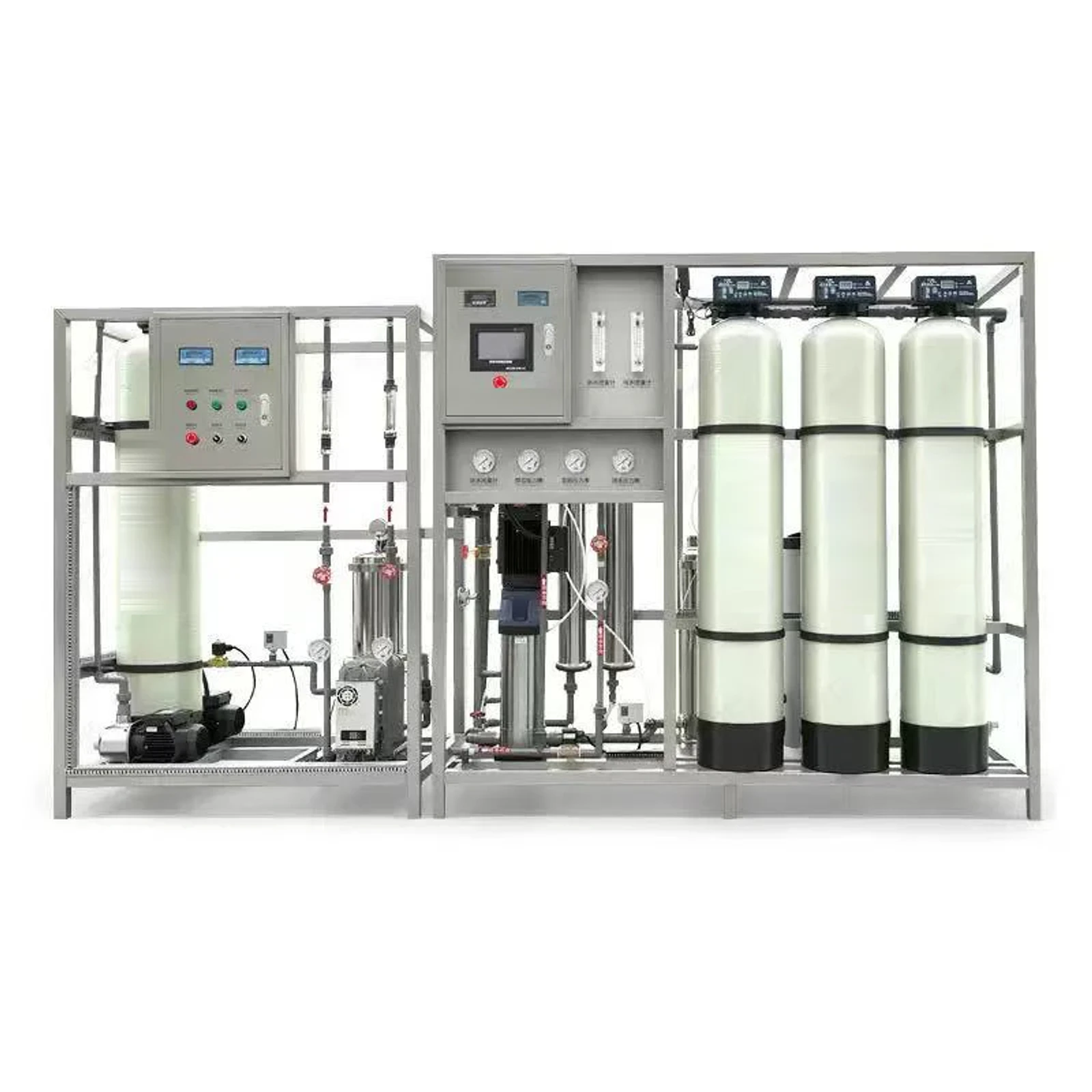
Primary starting point
Standard 250, 500 and 750 L/h RO + EDI configurations, custom-engineered up to 10 m³/h.
View core system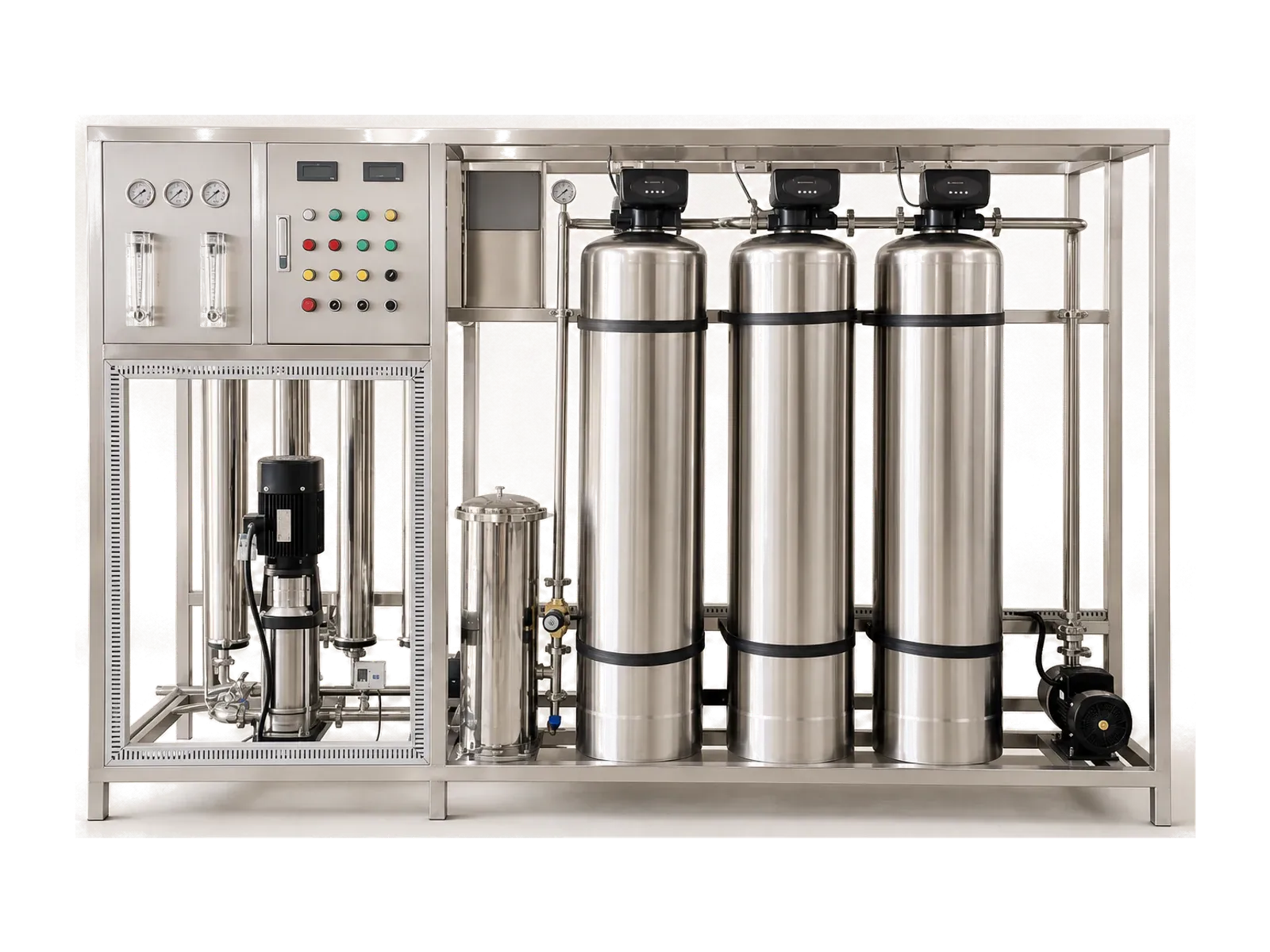
Alternative or supporting stage
A double-pass reverse osmosis system for higher-purity industrial and commercial water treatment, based on a 2 T/H reference configuration and customizable project sizing.
View core systemRFQ preparation
A concise project brief is more useful than selecting a catalogue model first.
FAQ
Specify the quality required by the analytical method or instrument manufacturer. A general label is not enough to define ionic, organic, particle and microbial limits.
Central systems suit shared demand, while point-of-use polishing can protect sensitive instruments. A hybrid design is often considered when requirements differ by room or method.
Storage time, stagnant piping, unsuitable tank materials, microbial growth and exhausted polishing media can all affect quality at the point of use.
Start with your water conditions
Share your application, feed-water source and required capacity. We will shape the treatment process, equipment scope and options around your project.