Food & Beverage
Ingredient, rinsing, cleaning and utility water planned around hygiene controls and the required product-water specification.
Open the food & beverage planning guideIndustry solution
Treatment trains for production, rinsing, formulation, cleaning and cooling duties where feed water and process sensitivity define the design basis.
Discuss Your Water RequirementsApplication routes
Each application changes the design inputs, operating risks and useful level of treatment.
Ingredient, rinsing, cleaning and utility water planned around hygiene controls and the required product-water specification.
Open the food & beverage planning guideMake-up, formulation and wash-water systems selected against chemical compatibility and process sensitivity.
Process-water treatment for variable color, hardness, dissolved salts and fouling risks.
Modular treatment for washing, preparation, component protection and production utilities.
Make-up and side-stream treatment planned around scaling, corrosion, solids and blowdown management.
Pretreatment and membrane options for a defined reuse duty after source-water and reject-disposal review.
Common feed-water issues
Treatment objective
Process selection logic
Feed-water analysis and process-use definition
Pretreatment for solids, chlorine, hardness or organics
RO, UF, softening or a combined membrane stage
Storage, disinfection or polishing only when the application requires it
Reference configurations


Core system starting points
These core families provide the main equipment starting points. Pretreatment, polishing, storage and controls are configured from the submitted water and operating data.
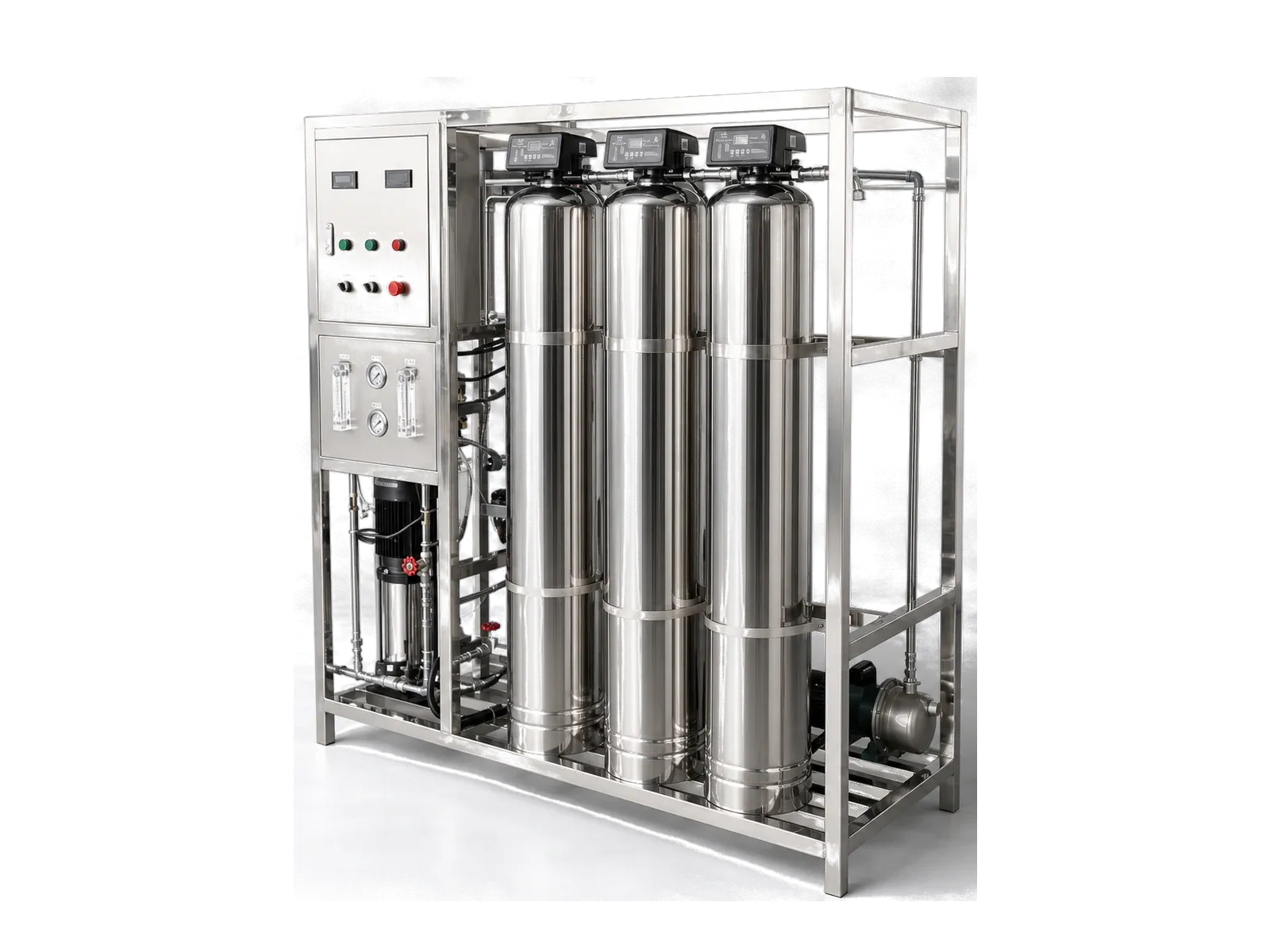
Primary starting point
A single-pass industrial reverse osmosis system built on a 304 stainless-steel frame, with configurable capacities from 0.25 to 100 T/H for drinking-water, industrial and process-water duties.
View core system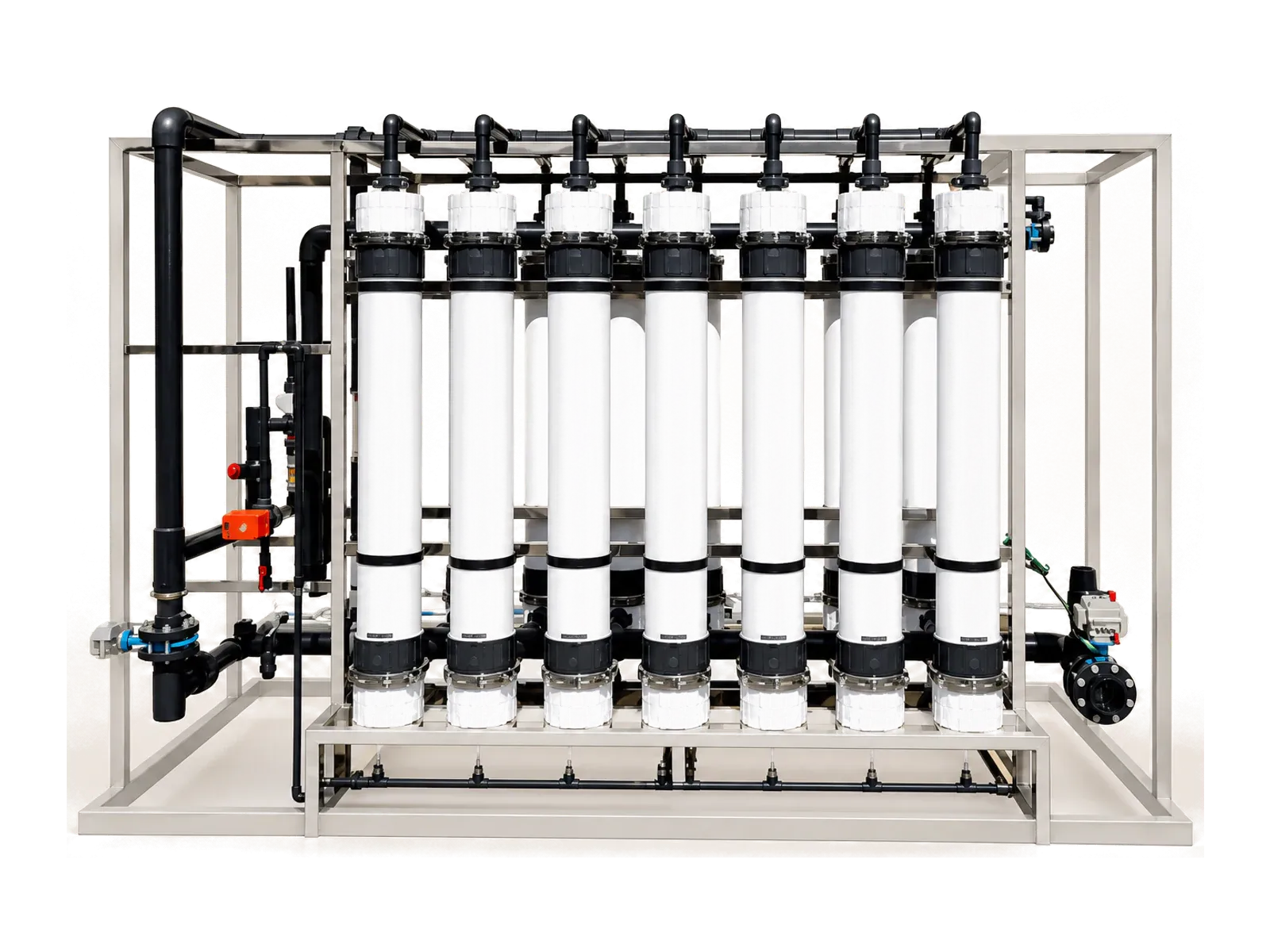
Alternative or supporting stage
Custom-engineered UF systems for tap water, groundwater and surface-water treatment.
View core systemRFQ preparation
A concise project brief is more useful than selecting a catalogue model first.
FAQ
A typical route combines feed-specific pretreatment with RO, UF or softening. The process must be selected from the source-water analysis and the quality required at the point of use.
It can when the lines share compatible quality, pressure and operating requirements. Separate polishing or distribution loops may be preferable when the duties differ.
Provide the water source or analysis, required product-water quality, peak and daily demand, operating hours, voltage, materials, destination and intended application.
Start with your water conditions
Share your application, feed-water source and required capacity. We will shape the treatment process, equipment scope and options around your project.