Groundwater
Treatment selected from hardness, iron, manganese, salinity, turbidity and microbiological findings.
Source-water solution
Treatment planning for difficult source water where incomplete analysis or an assumed process creates the greatest project risk.
Discuss Your Water RequirementsApplication routes
Each application changes the design inputs, operating risks and useful level of treatment.
Treatment selected from hardness, iron, manganese, salinity, turbidity and microbiological findings.
Pretreatment and RO staging assessed against salinity, scaling, recovery and concentrate disposal.
Open the high-tds water planning guideIntake, pretreatment and high-pressure RO planning based on source variability and marine discharge constraints.
Solids, metals, salinity and reuse requirements considered as one treatment and residuals-management problem.
Softening, antiscalant and membrane options selected from hardness load and downstream sensitivity.
Oxidation and filtration concepts based on dissolved species, pH, oxygen demand and solids handling.
Common feed-water issues
Treatment objective
Process selection logic
Obtain a representative laboratory analysis
Define product-water use and discharge constraints
Pilot or model pretreatment and membrane stages where risk warrants it
Confirm recovery, chemical use, residuals and monitoring before quotation
Reference configurations


Core system starting points
These core families provide the main equipment starting points. Pretreatment, polishing, storage and controls are configured from the submitted water and operating data.
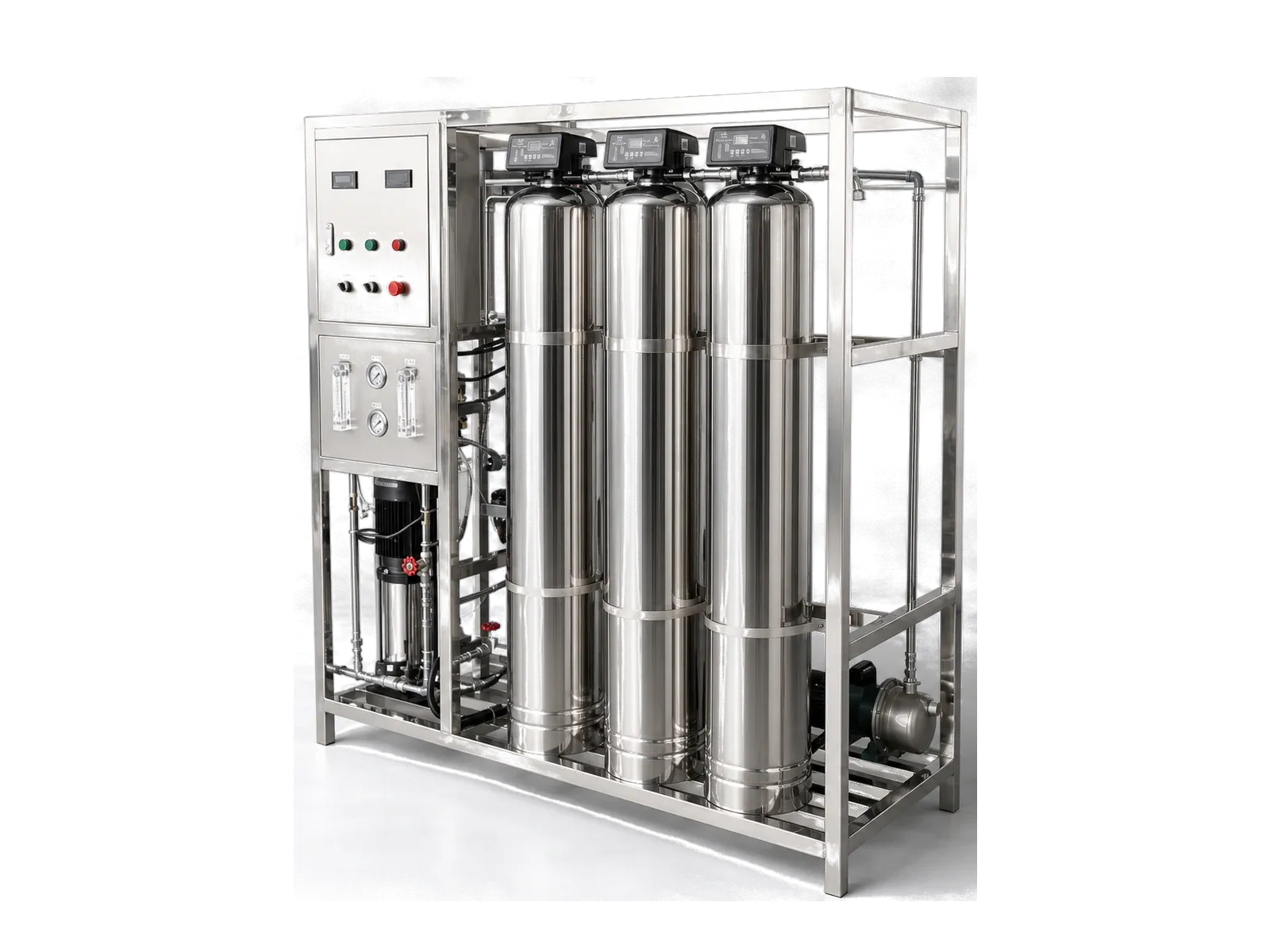
Primary starting point
A single-pass industrial reverse osmosis system built on a 304 stainless-steel frame, with configurable capacities from 0.25 to 100 T/H for drinking-water, industrial and process-water duties.
View core system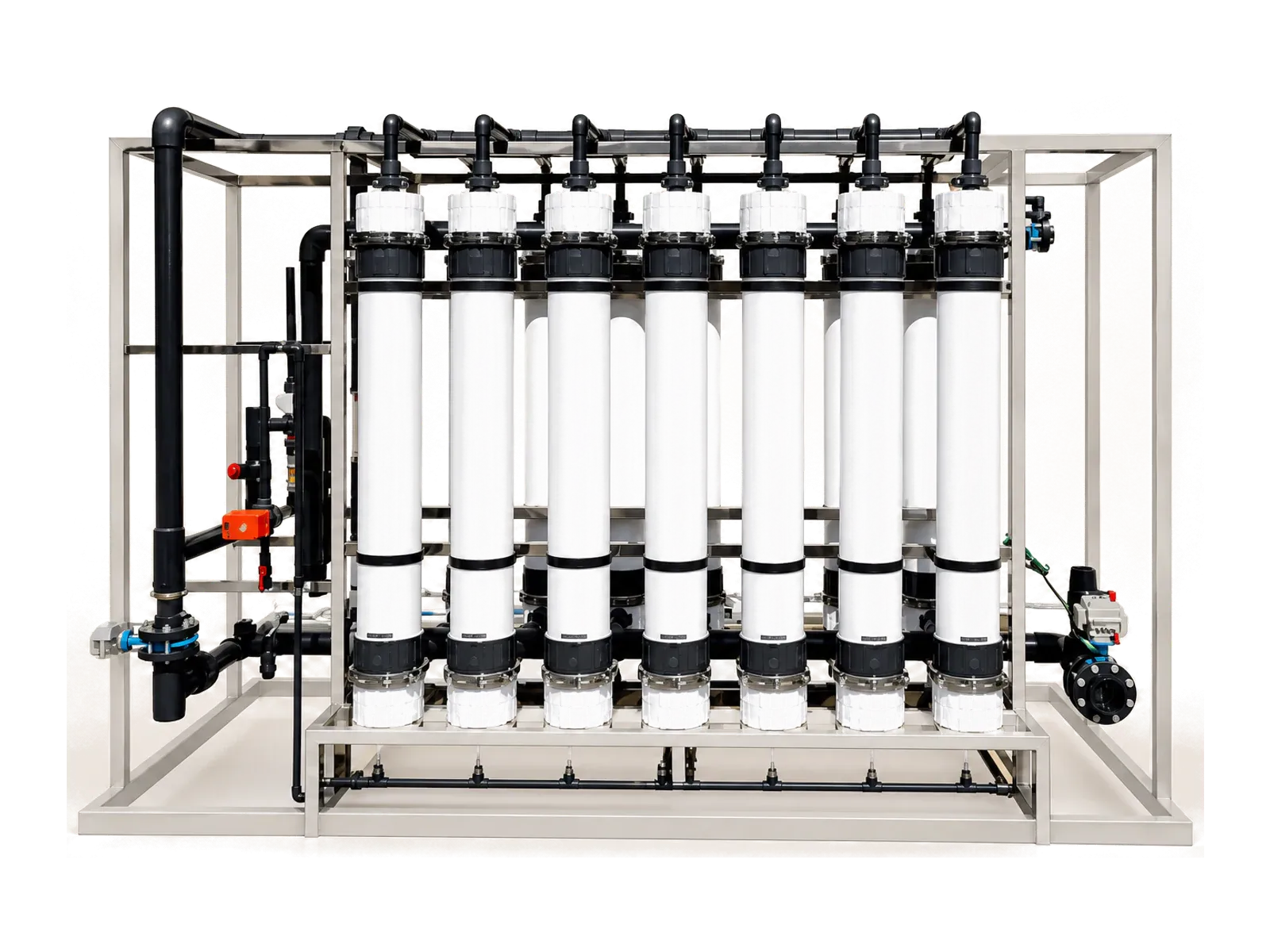
Alternative or supporting stage
Custom-engineered UF systems for tap water, groundwater and surface-water treatment.
View core systemRFQ preparation
A concise project brief is more useful than selecting a catalogue model first.
FAQ
Include conductivity or TDS, major ions, hardness, alkalinity, silica, iron, manganese, turbidity, organics where relevant, temperature and any seasonal variation.
Conventional ion-exchange softening exchanges hardness ions but does not normally reduce total dissolved solids. RO or another desalination process may be needed for a lower-TDS target.
The route may include oxidation, contact time and filtration, but pH, dissolved species, organics and the required residual concentration determine the design.
Start with your water conditions
Share your application, feed-water source and required capacity. We will shape the treatment process, equipment scope and options around your project.