
Application context
Define the real duty before selecting equipment.
Cooling-water make-up and side-stream treatment must be coordinated with cycles of concentration, metallurgy, heat load, blowdown and the chemical-treatment program.
Feed-water source
Not publicly disclosed
Capacity basis
Not publicly disclosed; sizing requires make-up flow, cycles and blowdown data.
Water challenge
Conditions that control the process.
Hardness, suspended solids, corrosion and microbiological control within the cooling-water management program.
Target water use and quality
Set the objective at the point of use.
Make-up quality compatible with the cooling-system metallurgy, operating cycles and chemical-treatment program.
Typical treatment train
- 01Solids filtration
- 02Hardness control where required
- 03RO only after a water-balance and concentrate-disposal review
Main equipment and components
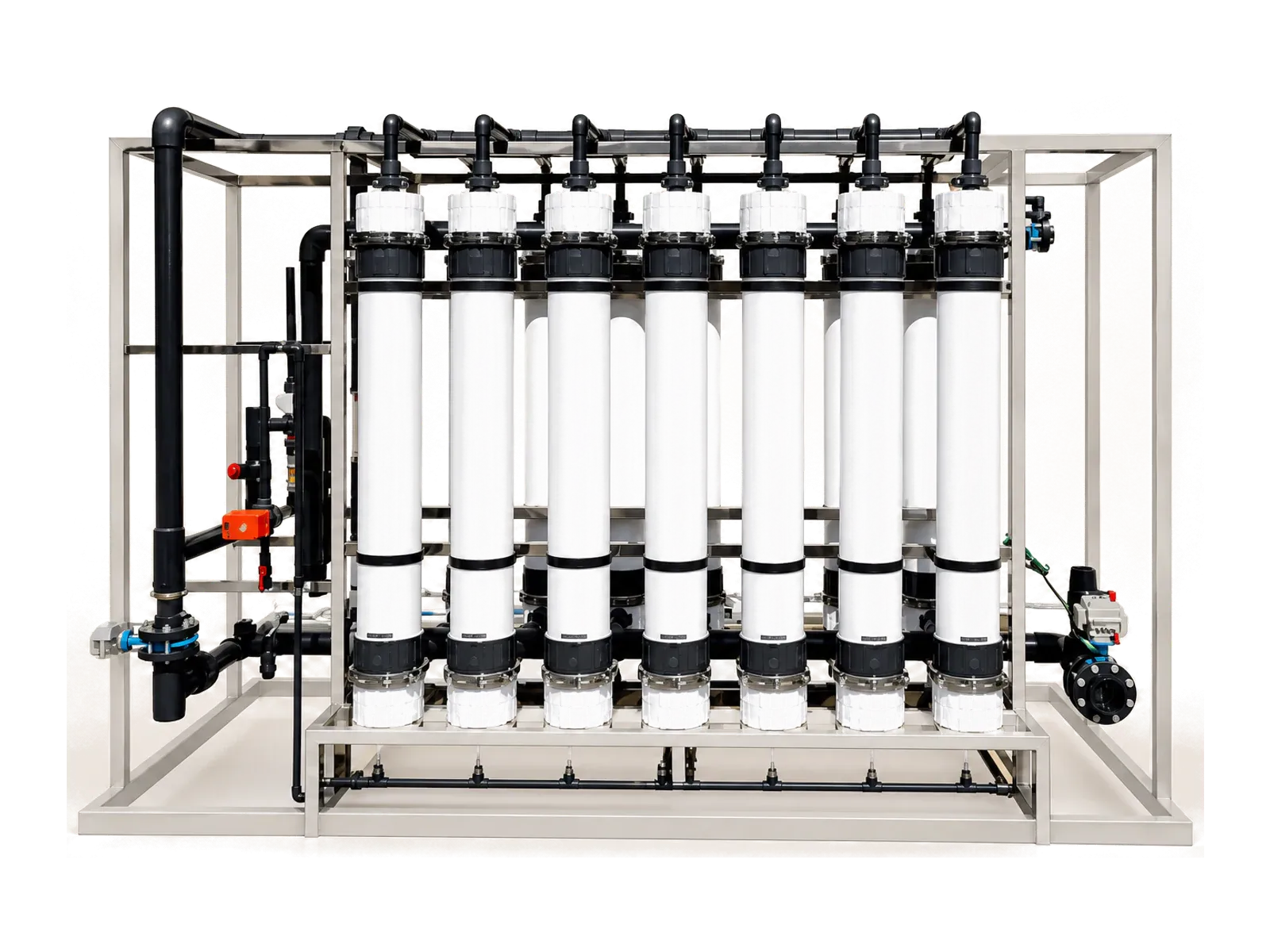
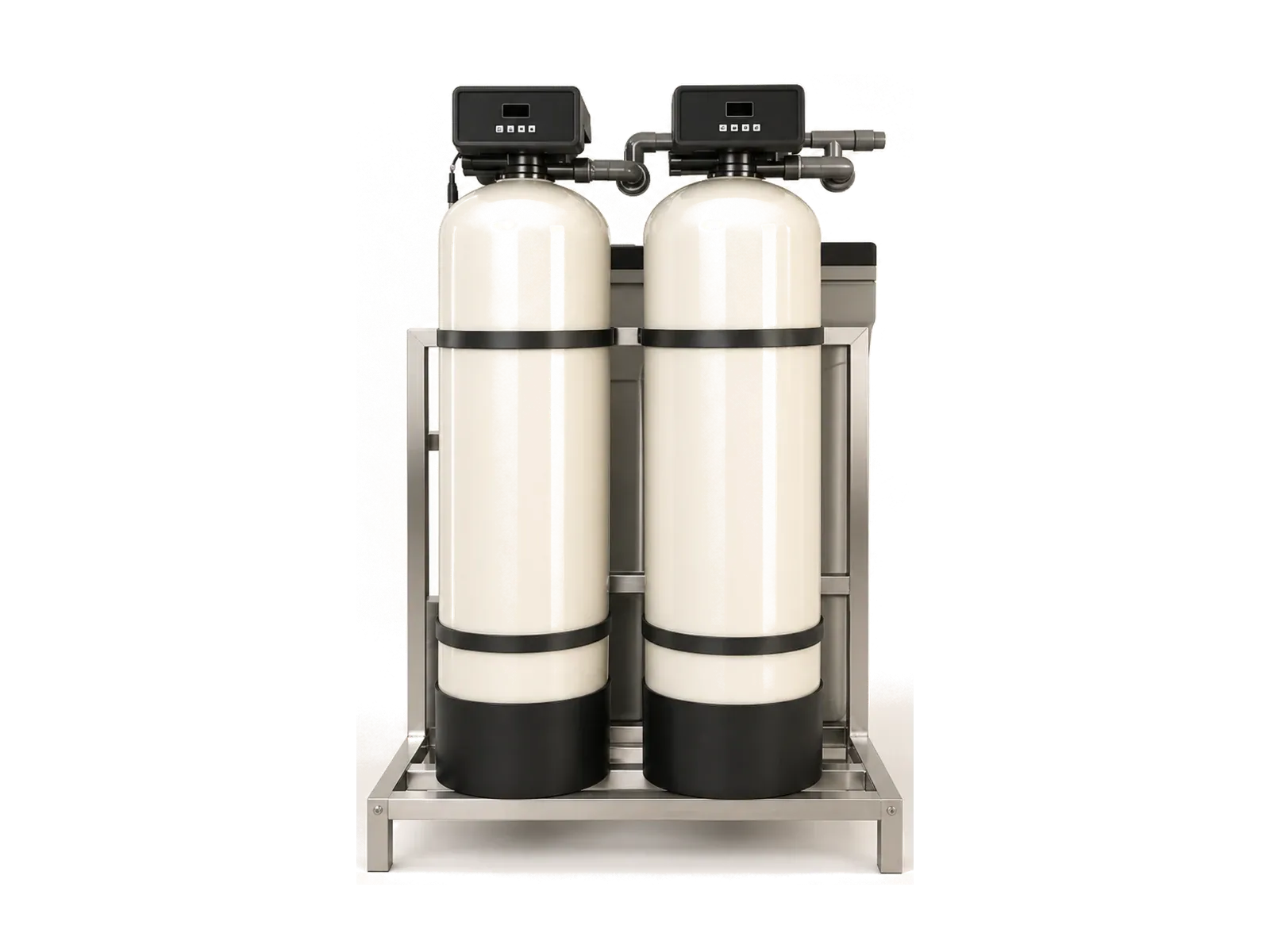
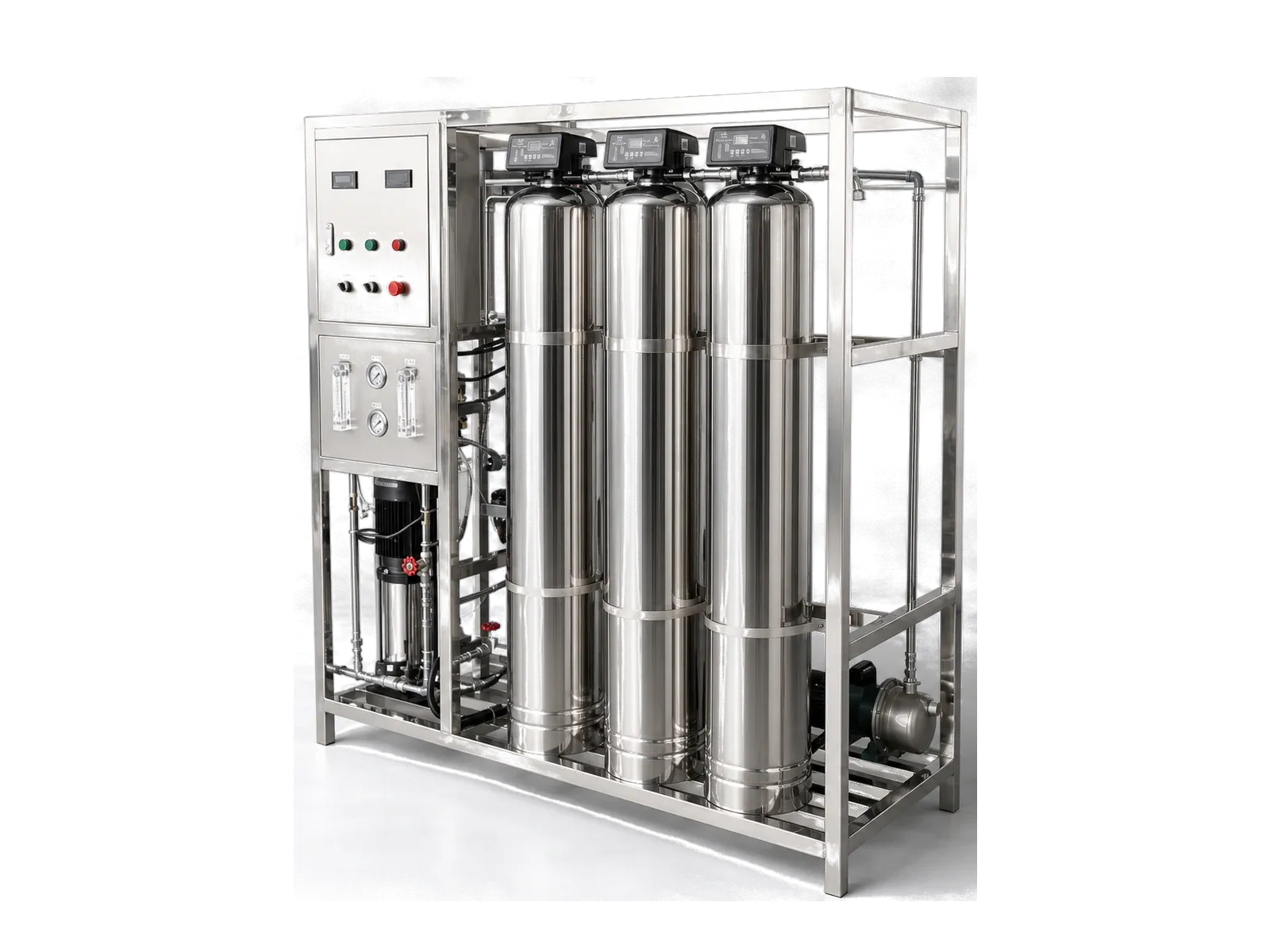
- Media or ion-exchange vessels
- Automatic valves and manifolds
- Pressure monitoring
Configurable options
- Materials, membrane brand, instrumentation and control level
- Single-train, duty/standby or parallel arrangement
- Storage, disinfection, polishing and distribution interfaces as required
Utilities and operating assumptions
- Stable feed pressure, electrical supply and drainage
- Space for operation, maintenance and chemical handling
- An approved reject, backwash or concentrate route
Required customer inputs
- Current feed-water analysis and source description
- Required flow, daily volume, operating hours and point-of-use demand
- Target water quality, utilities, destination and documentation requirements
Design objective
Confirm performance against an approved proposal.
Design target only. No water-saving percentage, zero-discharge status or operating result is published.