Boiler Feed Water
Scale and dissolved-solids control planned around boiler pressure, return condensate and make-up-water quality.
Open the boiler feed water planning guideUtility solution
Pretreatment and membrane systems for scale-sensitive boiler, cooling and plant-utility duties.
Discuss Your Water RequirementsApplication routes
Each application changes the design inputs, operating risks and useful level of treatment.
Scale and dissolved-solids control planned around boiler pressure, return condensate and make-up-water quality.
Open the boiler feed water planning guidePretreatment and demineralization concepts for plant make-up and supporting utilities.
Treatment selected from hardness, conductivity, solids and the intended cycles of concentration.
Common feed-water issues
Treatment objective
Process selection logic
Feed-water analysis and utility design review
Filtration and hardness control
RO where dissolved-solids reduction is required
Polishing and dosing interfaces defined by the boiler or cooling program
Reference configurations


Core system starting points
These core families provide the main equipment starting points. Pretreatment, polishing, storage and controls are configured from the submitted water and operating data.
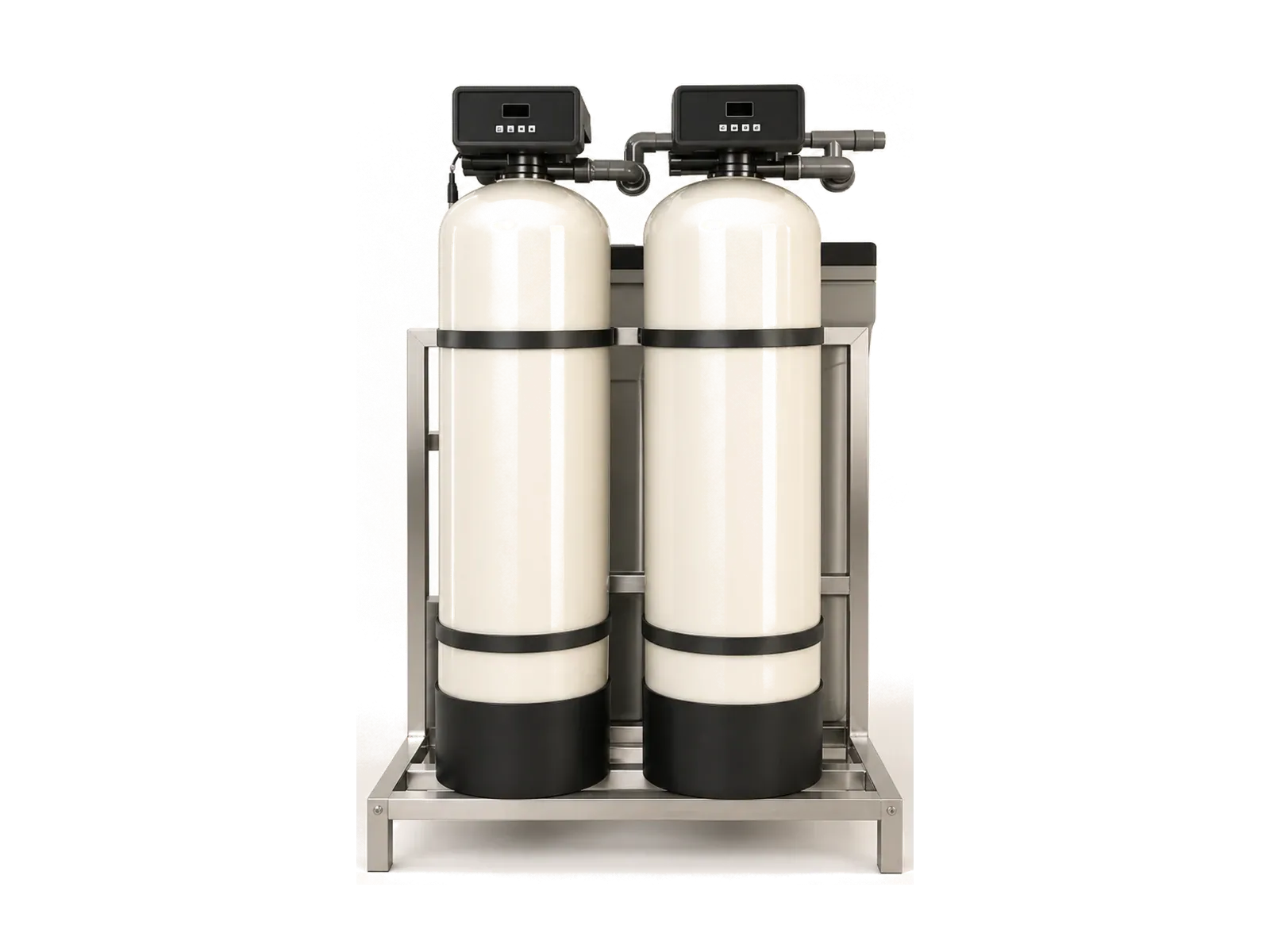
Primary starting point
A large-capacity water softening and purification system with a 20 T/H reference configuration and customizable capacities from 15 to 100 T/H.
View core system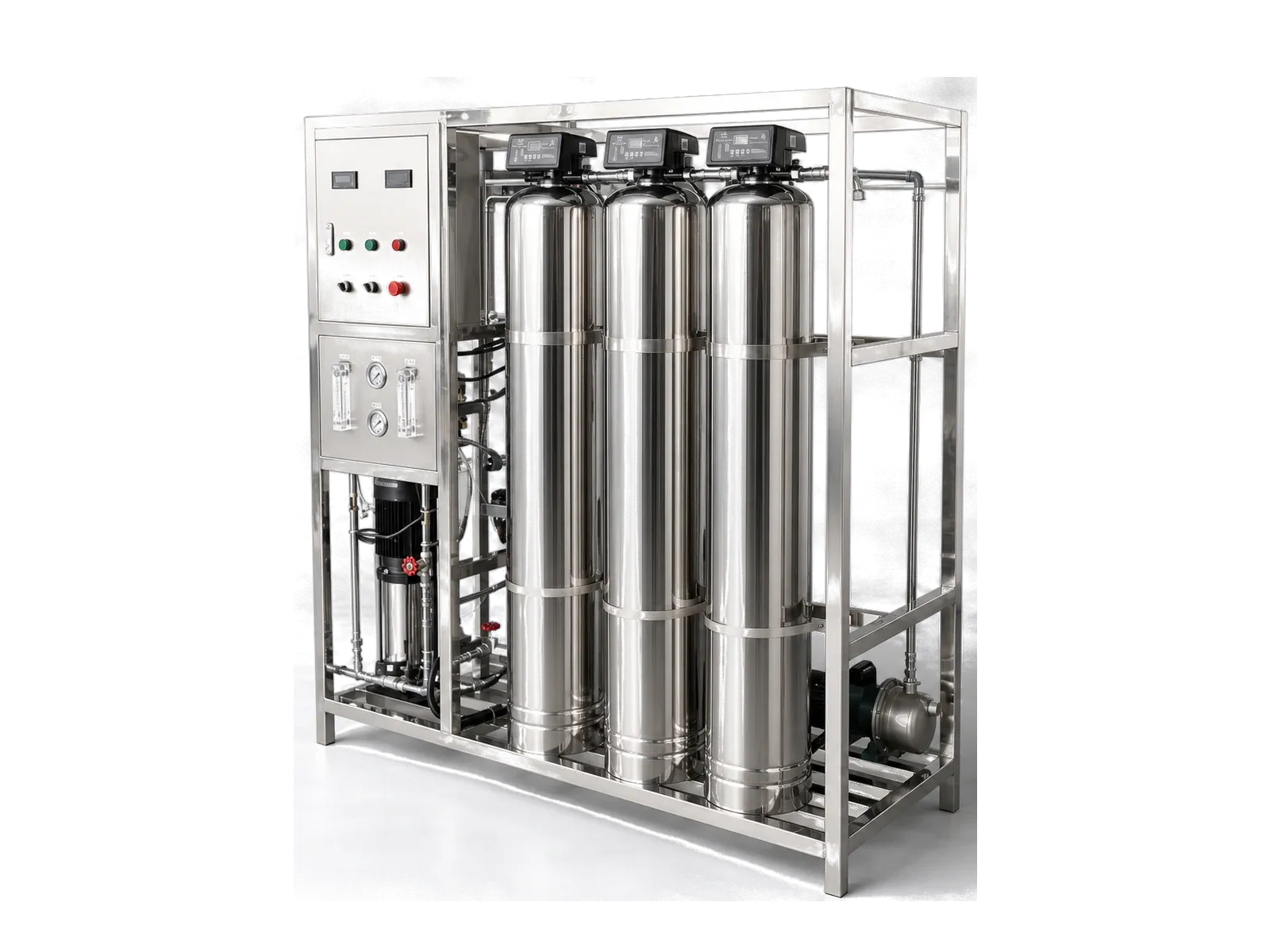
Alternative or supporting stage
A single-pass industrial reverse osmosis system built on a 304 stainless-steel frame, with configurable capacities from 0.25 to 100 T/H for drinking-water, industrial and process-water duties.
View core systemRFQ preparation
A concise project brief is more useful than selecting a catalogue model first.
FAQ
It depends on boiler pressure and feed chemistry. Softening controls hardness, while RO or additional polishing may be required when dissolved solids, silica or conductivity must also be reduced.
Provide boiler pressure, make-up and peak flow, condensate return, operating hours, feed-water analysis, target feed quality and the chemical-treatment program.
RO may be considered when dissolved salts limit cycles of concentration, but recovery, pretreatment, reject disposal and corrosion control must be assessed together.
Start with your water conditions
Share your application, feed-water source and required capacity. We will shape the treatment process, equipment scope and options around your project.